
Dayton, OH and the Miami Valley
Deck Builders in Piqua, OH
Piqua is a river town of older mill housing and more affordable stock, which makes it an investor and first time buyer market. Most of the deck work here is repair and replacement to a safe standard.
- Footings below the frost line
- Permits and inspections handled
- Written scope before we start
Dayton Custom Decks builds and repairs decks throughout Piqua, Ohio.
Piqua grew along the Great Miami River, and the mills that lined the water built the town long before the suburbs south of Dayton existed. The workforce housing from that era is still standing and still lived in, and many of those houses carry a deck that was added decades after the original build. That history explains most of the deck work here, and it is why we approach a Piqua job differently from a new build on a subdivision lot.
What Piqua housing means for a deck
The mill era stock sets the terms
The older streets near the river and the rail lines were laid out tight, with modest two storey houses on small lots. A rear door on a house like this usually opens onto a compact yard, often with a grade that runs away from the building or drops toward a neighbouring lot. A deck in that space is a working platform rather than a design feature, and the constraints are real. The property line is close, the access is narrow, and the elevation has to be solved inside a shallow footprint.
The decks on this housing are rarely original to the house. Most were added in the nineteen eighties or nineties by an owner who wanted somewhere to sit, and many have now passed through several owners and several rounds of repair. Some of that work was competent. A lot of it was cosmetic, which is why the first task on any Piqua deck is finding out what is actually carrying load.
A rental and first time buyer market
Piqua holds a larger share of rental housing than the communities on the southern side of the metro, and it also draws a steady stream of first time buyers. Both groups tend to see a deck as a responsibility rather than a luxury. A landlord wants a structure that is safe, durable and cheap to keep. A first time buyer wants the same thing on a tighter budget, usually with a longer list of other things the house needs first.
That changes the conversation at the estimate. Before colour, before board width, before a railing style, there are three questions that decide the shape of the job. Are the posts on real footings. Is the ledger connected to the house with proper flashing. Does the guard meet the four inch sphere rule and the thirty inch height rule. Getting those three right is what turns a dangerous deck into a sound one, and everything else is decoration on top.
Where the work concentrates
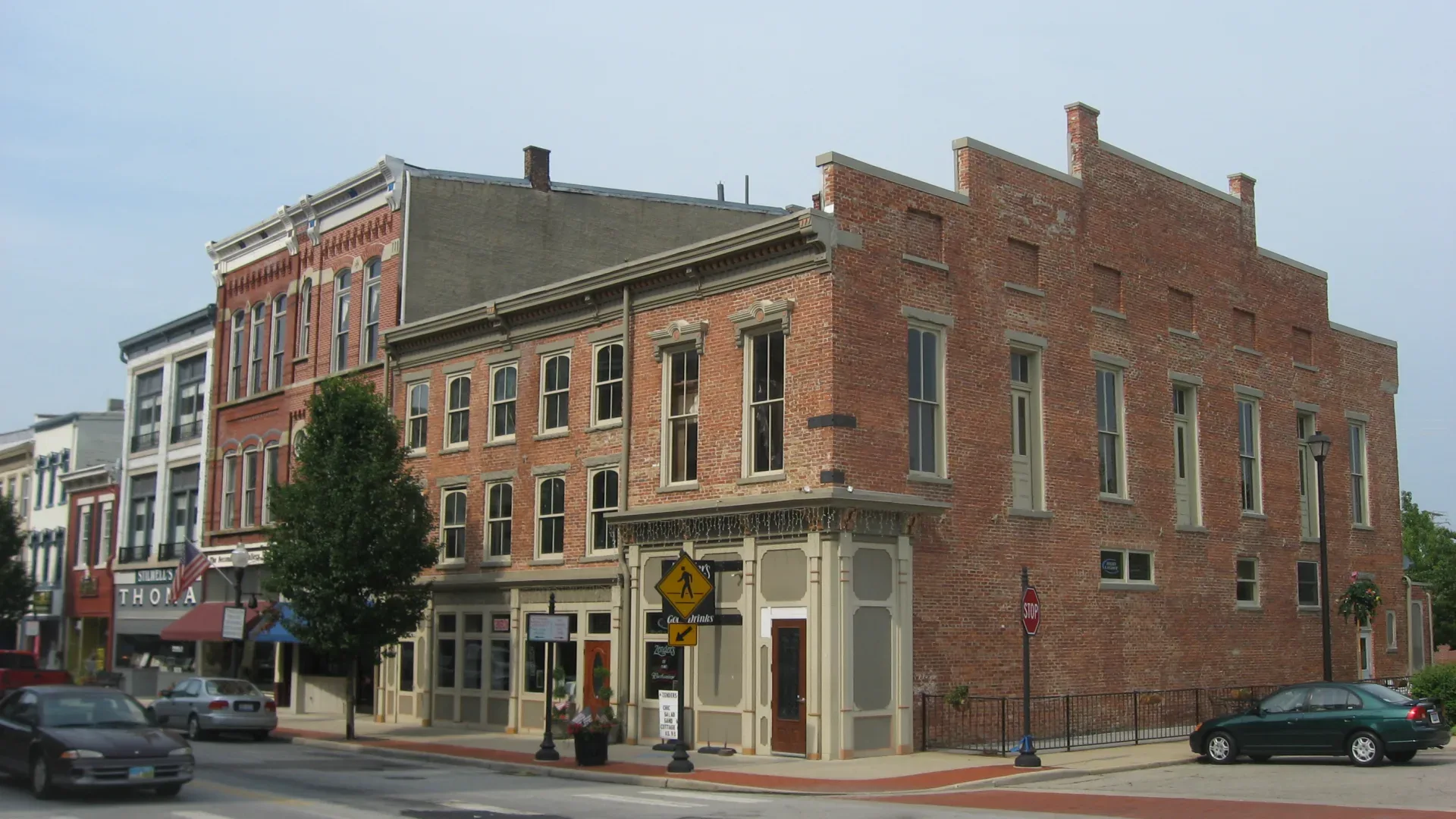
The bulk of our Piqua work sits in the older grid near downtown, on the blocks that grew up around the mills, and along the river where the lots are oldest and tightest. We also build on the newer streets at the edge of town, where the housing is younger and the decks are larger, but that is the smaller share of what we do here. Landmarks that people use to place their property include Historic Downtown Piqua, Fort Piqua Plaza, the Great Miami River and Lock Nine Park. Those names tell us the lot, the grade and the access before we arrive.
Living with river humidity
Proximity to the Great Miami is one of the things people enjoy about Piqua, and it is also one of the things that shortens the life of a deck. Air near the river stays humid for more of the year, and a wood surface in that air takes longer to dry after rain. A deck that would dry out in an afternoon on higher ground can stay damp well into the following day, and a surface that stays damp is where mould and algae start.
The practical answers are the same ones that make a deck last anywhere, only more so here. Ventilate underneath by leaving the frame open rather than closing it in with solid skirting. Keep the board gaps clear so water drains instead of sitting. In the most shaded and most humid yards, a capped board or a treated surface with a shorter sealing cycle is the sensible choice, and a small upgrade now avoids replacing boards later.
Repair and replacement, the core of the work here
Re decking over a frame that is still sound
The happiest outcome on an older Piqua deck is the one where the frame is good and only the surface has gone. That happens often enough to be worth checking every time. Where the posts, beams, joists and ledger are solid, pulling the old boards and installing new ones costs a fraction of a rebuild, and it is the best value work on this page. We get underneath before we quote rather than assuming the worst from above.
Frames that sit on surface blocks
The most common failure we find is a deck that is footed correctly at the house and carried on concrete blocks at the outer beam. Blocks sit on top of the soil, so they move with the frost, and in a river town with clay soil that means movement every winter. The deck slopes, the boards open, and water tracks into the frame. Replacing the block line with poured footings below the frost depth is the only real fix, and it is far easier to do while the deck surface is already off.
Ledgers and the house connection
On a house from the mill era the wall behind the deck is often older than the deck itself, and the connection between the two is where water damage starts. A ledger that was nailed on without flashing lets rain into the rim joist for years before anything shows on the inside. When we open a deck and find a failed ledger, the repair is structural and it has to happen before new boards go down. Patching over it only hides the problem for the next owner. See deck repair for how we handle that scope.
Guards, stairs and railings
Rental and older owner occupied decks share one weak point, and it is the guard. Wood posts rot at the base where they meet the deck edge, and the connection is often a pair of bolts through the rim rather than a proper block between the joists. A failed guard is a fall, and a fall is the liability that a landlord cannot ignore. An aluminium railing removes the rot problem entirely and keeps the profile thin on a small lot.
Stairs are the second place a deck fails. The stringers and the handrail get the least sun and the most traffic, and on an older deck they are frequently the first members to go. We check the stringer connection at both ends and the handrail height before we price anything else.
Staining and sealing on a damp deck
A wood deck in Piqua lives near a river, and the moisture that comes with that shortens the interval between treatments. Cleaning the boards, treating any algae and resealing on schedule is the difference between a surface that lasts and one that has to be replaced early. See deck staining and sealing for what that cycle looks like across a year.
The investor and first time buyer calculation
If you rent the house out
The landlord calculation is simpler than it looks. Safety and compliance come first, because an unpermitted or unsafe deck is a liability with a solicitor attached to it. After that, the question is durability per dollar. A treated deck on footings below frost, with a guard that meets the rule, is a defensible minimum. Composite earns its extra cost when the holding period is long enough for the maintenance saving to overtake the higher price.
If this is your first house
The first time buyer in Piqua usually inherits a deck that has been neglected rather than one that was never built. The temptation is to replace the whole thing. Often that is not necessary, and the honest answer is a repair that gets the structure and the guard right and leaves the cosmetic problems for later. We would rather price the safe version first and let you decide about the surface separately. See deck replacement for when a full rebuild is the better call.
What holds value in Piqua
A permitted deck with a sound frame and a compliant guard holds value here. An unpermitted deck does not, and it is one of the first things a buyer raises at closing. On this housing stock the permit record is worth more than a premium board, because it answers the question the buyer is actually asking. The deck cost guide gives the general market ranges.
There is also a simpler test that applies to both groups. A deck that is safe, sound and permitted is an asset. A deck that looks good but rests on blocks and carries a guard that moves when you lean on it is a future expense that has been dressed up. On an older Piqua street the second kind is common, and it is the reason we spend the first visit looking underneath rather than standing on the surface.
Permits, registration and the city portal
Contractor registration and the surety bond
Before a contractor can pull a deck permit in Piqua, the city requires that contractor to register and to carry a surety bond. The bond is not a warranty on your deck. It is a guarantee that the registered contractor will meet the city registration terms, and it is a genuine protection for a homeowner, because it gives the city a remedy if a job is abandoned or left in an unsafe state. Ask for the registration and the bond, then verify them with the city rather than accepting a photocopy.
Zoning through the city portal
Piqua runs its planning and zoning through the city portal, and a deck replacement is a project that gets reviewed. Setbacks, lot coverage and the structure itself all apply, and the review is designed to catch the deck that fits the yard but sits too close to a line. We prepare the plan, submit it through the portal and answer the reviewer. On the older lots near downtown the setback question is the one that most often changes the design, so we check it before we draw rather than after.
What a homeowner should check
Three things. That the builder is registered and bonded with the city. That the permit is open in the correct name before the first post goes in. And that the final inspection is signed off and the card handed over at the end. A permit that is still open when the job stops is a problem for the owner rather than the builder. We handle all three and give you the paperwork.
Materials and details for an older river town
Pressure treated on a frame built for the future
Treated pine remains the sensible surface on a Piqua deck where the budget is tight or the holding period is short, provided the frame underneath is built to last. We frame at sixteen inch centres even under treated boards. The cost difference is small, the surface feels more solid, and the frame is then ready for a composite surface in ten years without being rebuilt.
Composite where the deck will stay
Where the owner intends to keep the house, composite is the better spend. It does not need the annual attention that treated demands, and on a rental that difference is decisive, because nobody in the house is going to stain it. Capped boards also resist moisture and algae, which matters on a lot close to the river.
Aluminium railings and ground contact framing
An aluminium guard is the right default on a small lot, where a solid wood panel would close the space in. It also removes the rot point at the base of every post. In the frame, every member that sits near the soil or against the house comes in ground contact rated material, because Piqua soil holds moisture and the river keeps the air humid. Those two choices do more for the life of a Piqua deck than any surface upgrade.
Getting started in Piqua
We start underneath. The first visit is about the frame, the footings, the ledger and the guard, because those decide whether you are looking at a repair or a replacement. From there we price the safe version against a full rebuild and put both in writing. If you are an investor, tell us the holding plan and we will price durability against cost honestly. If you are buying your first house, tell us the budget and we will tell you what can wait until next year.
The estimate is free and the scope is written. General ranges for this market are on the deck cost guide.
Why homeowners pick Dayton Custom Decks
Footings below the frost line
Ohio ground heaves. Every post we set lands on a poured footing below the local frost depth, which is what keeps a deck level through a decade of freeze and thaw.
Permits and inspections handled
We pull the permit, meet the inspector and hand you the signed card. An unpermitted deck becomes your problem the day you sell the house.
Written scope before we start
Materials, framing spec, hardware, timeline and price in writing before anybody swings a hammer. No verbal change orders.
Neighbouring communities we build in
Piqua sits in Miami County. Deck rules change from one jurisdiction to the next, so these are the communities next door and who issues the permit in each.
- Oakwood, OH in Montgomery County
- Kettering, OH in Montgomery County
- Centerville, OH in Montgomery County
- Beavercreek, OH in Greene County
- Springboro, OH in Warren County
- Huber Heights, OH in Montgomery County
- Miamisburg, OH in Montgomery County
- Fairborn, OH in Greene County
- Xenia, OH in Greene County
- Vandalia, OH in Montgomery County
- Troy, OH in Miami County
- Lebanon, OH in Warren County
- Bellbrook, OH in Greene County
- Yellow Springs, OH in Greene County
Deck questions from Piqua homeowners
Do I need a permit to replace a deck in Piqua?
Yes. Piqua runs planning and zoning through its own city portal, and a replacement deck is reviewed like a new one because the structure, the setbacks and the lot coverage all still apply. The inspection is the point of the exercise rather than a formality. We prepare the plan, submit it through the portal and meet the inspector, so the permit is handled from start to finish.
What is the contractor registration with a surety bond in Piqua?
Piqua requires a contractor to register with the city and carry a surety bond before work can be pulled under a permit. The bond is not insurance for your house. It is a guarantee held by the city that the registered contractor will meet the registration terms, and it gives the city a remedy if a job is abandoned or left unsafe. Ask any builder for the registration and the bond, then verify both with the city rather than accepting a photocopy at face value.
My Piqua deck sits on concrete blocks. Can it be saved?
The frame often can be, even when the foundations cannot. Blocks at the outer beam are the most common failure we find here. They move with the frost, the deck slopes, the boards open at the joints and water gets into the frame. Replacing the block line with poured footings below the local frost depth is the fix, and it is worth doing while the surface is already off. We quote the footings separately so you can see what the foundation work costs on its own.
Is it worth putting a composite deck on a rental house in Piqua?
It can be, if you plan to hold the property for a while. Composite costs more up front and it does not need to be sealed or stained as often as treated pine, which matters when nobody living in the house is going to do that work. If the holding period is short, a treated deck on a frame spaced for composite is the more sensible spend, because the frame is the expensive part and it can take a composite surface later.
What does a deck cost in Piqua?
Piqua comes in below the Dayton metro average because the houses are smaller and the lots are tighter. A straightforward treated deck of around 200 square feet runs roughly 8,000 to 13,000 dollars installed, and re decking over a frame that is still sound runs less than that. Composite adds to the figure. The general ranges for the wider market are on our deck cost guide.
How long does a deck replacement take in Piqua?
A single deck replacement is usually framed and finished in four to six days of on site work once the permit is in hand. The variable here is the frame. If the footings have to be replaced as well, add a few days for the excavation and the concrete cure, plus the permit turnaround before any of it starts. We give you the sequence in writing rather than one optimistic number.