Dayton, OH and the Miami Valley
Deck Staining and Sealing in Dayton, OH
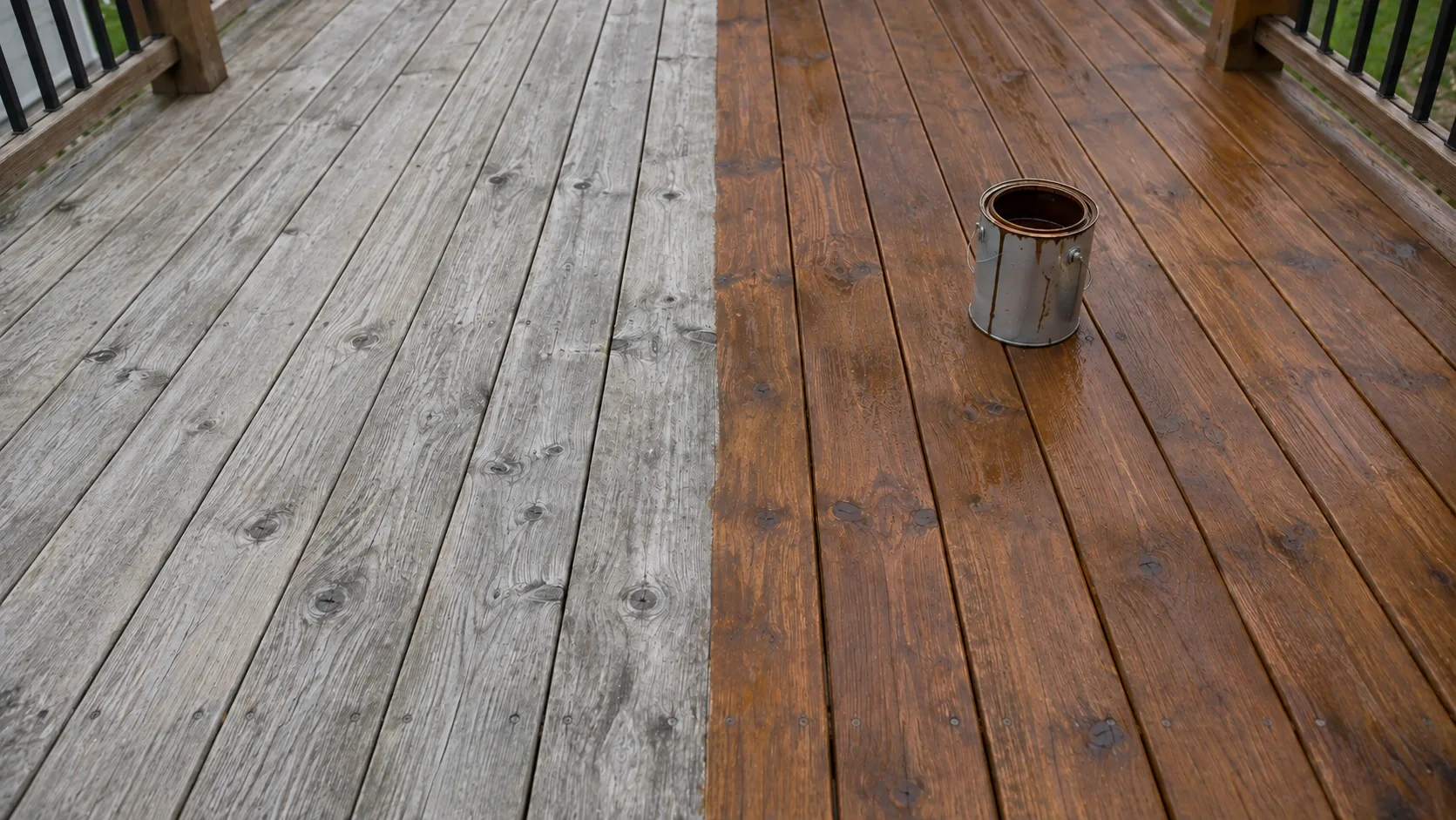
Cleaning, brightening, sanding where it is needed, then a penetrating finish that survives an Ohio winter. The cheapest thing you can do to keep a wood deck alive.
- Footings below the frost line
- Permits and inspections handled
- Written scope before we start
Apex Decks cleans, brightens and seals wood decks across Dayton and the Miami Valley.
This is the least interesting service on the site and the one with the best return. Sealing every two to three years is the difference between a deck that looks presentable at twenty years and one replaced at eight.
What we actually do
Inspect first
Loose boards, protruding fasteners, soft spots and railing movement all get noted before anything wet touches the deck. There is no point finishing a board that needs replacing, and a deck with a structural problem needs repair before it needs a coat.
Clean
A deck cleaner appropriate to the wood and the existing finish, worked in and rinsed at low pressure. The cleaner removes mildew, algae and grey surface fibres. The water is there to rinse, not to blast. High pressure on softwood raises the grain and creates the fuzzy surface people then complain about.
Brighten
An acidic brightener neutralises the cleaner and restores the wood’s pH and colour. Skipping this step is why some deck finishes look blotchy: a surface left alkaline does not accept stain evenly.
Sand where it is needed
Not every deck needs it. Where boards have raised grain, mill glaze or the remains of an old finish, sanding gives the new stain something to key into. Railings and handrails get attention here because they are what people touch.
Apply
Penetrating oil based semi transparent stain as the default, brushed or rolled and back brushed rather than only sprayed, so it is worked into the grain. Two thin coats beat one heavy coat every time, and a heavy coat that cannot soak in is what creates a tacky surface that never fully cures.
Cure
Off the deck for a day or two depending on temperature and humidity. Furniture back on after that, and pots on feet rather than flat on the boards.
Choosing a finish
Clear sealer
Repels water, does almost nothing about UV. The deck still greys, just more slowly. Cheap and it needs redoing most often. Reasonable on a covered porch that gets no direct sun.
Semi transparent stain
Pigment for UV protection, grain still visible. This is what we recommend for most Dayton decks and it is the best balance of appearance, protection and recoat interval.
Semi solid and solid
More pigment, more coverage, less grain. Useful on an older deck where the boards no longer match or on one that has been coated before. Be aware that the more film a product builds, the more likely it is to peel rather than wear.
What to avoid
Deck paint and thick film forming finishes. They look excellent for two seasons and then lift, and stripping 400 square feet of peeled film off a deck is the worst job in this trade.
What it costs and why railings change it
The deck surface is straightforward square footage. Railings are not. A guard system has two faces, top and bottom rails, and every baluster has four sides. A 40 foot railing run can carry more coatable surface than the deck it surrounds and it takes far longer per square foot because none of it can be rolled.
That is the main reason a quote for finishing a deck with heavy wood railings comes back higher than people expect, and one of the arguments for switching to aluminium railings, which never need coating at all.
When finishing is not the answer
If the boards are checked deeply, cupped, or throwing splinters that sanding will not remove, a finish will not fix that. Replacing the decking over a sound frame costs more than staining but it is the right spend. We will tell you which one you are looking at when we come out.
Where we finish decks
Across Dayton, Oakwood, Kettering, Centerville, Beavercreek and Springboro.
Deck cost in Dayton, OH
| Service | Cost per sq ft | Includes |
|---|---|---|
| Clean and seal, clear | $2.20 to $3.50 | Wash, brighten, one coat penetrating sealer |
| Clean and stain, semi transparent | $3.00 to $4.75 | Wash, brighten, one to two coats |
| Sand, clean and stain | $4.50 to $7.00 | Surface sanding, wash, brighten, stain |
| Strip failed film finish | $3.50 to $6.00 | Chemical strip, neutralise, sand back |
| Railings and stairs | Priced separately | Far more surface area than it looks |
Ranges are typical installed prices for the Miami Valley and include footings, framing, decking, railings and stairs unless noted. Your written estimate is the number that counts.
Why homeowners pick Apex Decks
Footings below the frost line
Ohio ground heaves. Every post we set lands on a poured footing below the local frost depth, which is what keeps a deck level through a decade of freeze and thaw.
Permits and inspections handled
We pull the permit, meet the inspector and hand you the signed card. An unpermitted deck becomes your problem the day you sell the house.
Written scope before we start
Materials, framing spec, hardware, timeline and price in writing before anybody swings a hammer. No verbal change orders.
Deck Staining and Sealing questions we get asked
How often should a deck be sealed in Ohio?
Every two to three years for the horizontal surfaces, and you can usually stretch railings and vertical faces further because they shed water and take less UV. South and west facing decks need it sooner. The test is simple: sprinkle water on the boards, and if it soaks straight in rather than beading, the finish has gone.
Can you seal a brand new deck?
Not immediately. New pressure treated lumber comes wet from the treatment process, and sealing it while it is still wet traps that moisture and makes the finish fail. We usually wait two to four months, then test with water before coating. Cedar and kiln dried material can often be done sooner.
What is the difference between a sealer and a stain?
A clear sealer repels water but offers very little UV protection, so the wood still greys. A semi transparent stain adds pigment, and pigment is what actually blocks UV, so it holds colour far longer. A solid colour stain is essentially paint and hides the grain. For a deck in this climate, semi transparent is the sensible middle.
Why is my deck finish peeling?
Almost always because a film forming product was used, or because it was applied over a damp or dirty surface. Films sit on top of the wood and cannot move with it through freeze thaw, so they crack and lift. Penetrating oil finishes soak in and wear away evenly instead of peeling. Stripping a failed film is the most expensive deck finishing job there is.
Do you pressure wash the deck?
We wash it, but at low pressure with a cleaning solution doing the work rather than the water. High pressure on softwood tears the surface fibres open, and that is what makes a deck feel fuzzy and splinter afterwards. If the boards need more than washing, they need sanding, not more pressure.
Can you stain a composite deck?
Capped composite should not be stained and does not need it. Older uncapped composite from fifteen or more years ago can sometimes be cleaned and coated with a product made for it, but the results vary and the coating will need redoing. If an old composite deck looks bad, replacing the boards over the existing frame is usually the better spend.