Dayton, OH and the Miami Valley
Deck Builders in Oakwood, OH
Decks built for Oakwood's pre war housing stock, narrow lots and mature tree cover. Almost every job here is a replacement that has to fit a house, not a blank yard.
- Footings below the frost line
- Permits and inspections handled
- Written scope before we start
Apex Decks builds and replaces decks throughout Oakwood, Ohio.
Oakwood is not like the rest of the Dayton market and the work here reflects it. Pre war houses on narrow lots with mature trees and a back yard no machine can reach, so almost every job is a replacement that has to suit the house.
What Oakwood houses need from a deck
Fitting a house with an opinion
A 1920s brick colonial on Shafor Boulevard has proportions, materials and trim details that a generic deck ignores. The things that make a deck sit correctly on a house like that are unglamorous: railing proportion, post spacing that relates to the window rhythm, and a board colour that does not fight the brick.
We spend more time on that here than anywhere else we work, because a deck that looks bolted on is the most common complaint about outdoor work in this neighbourhood.
Narrow lots and setbacks
Oakwood’s rear and side setbacks are tighter than the outer suburbs and the lots are narrower to begin with. A good number of the decks people describe to us on the phone will not fit. We check zoning before drawing anything, which saves everybody a wasted conversation.
Mature tree cover
Roots dictate where footings can go. We lay out the frame around significant roots rather than cutting through them, which occasionally means an irregular beam line. Tree cover also means more shade, more moisture and more organic debris on the deck, which pushes toward materials that handle damp and toward keeping board gaps clear over winter.
No machine access
Most Oakwood back yards are reached through a gate, a side path or a detached garage. Footings get hand dug, concrete gets barrowed, and lumber gets carried. That is a real cost and we put it in the estimate rather than in a change order.
Work we do most in Oakwood
Deck replacement
The largest share of what we build here. Decks from the eighties and nineties that have reached the end of their frames, often with a nailed ledger and posts that were buried rather than set on footings. The full process is on the deck replacement page.
Cedar decks
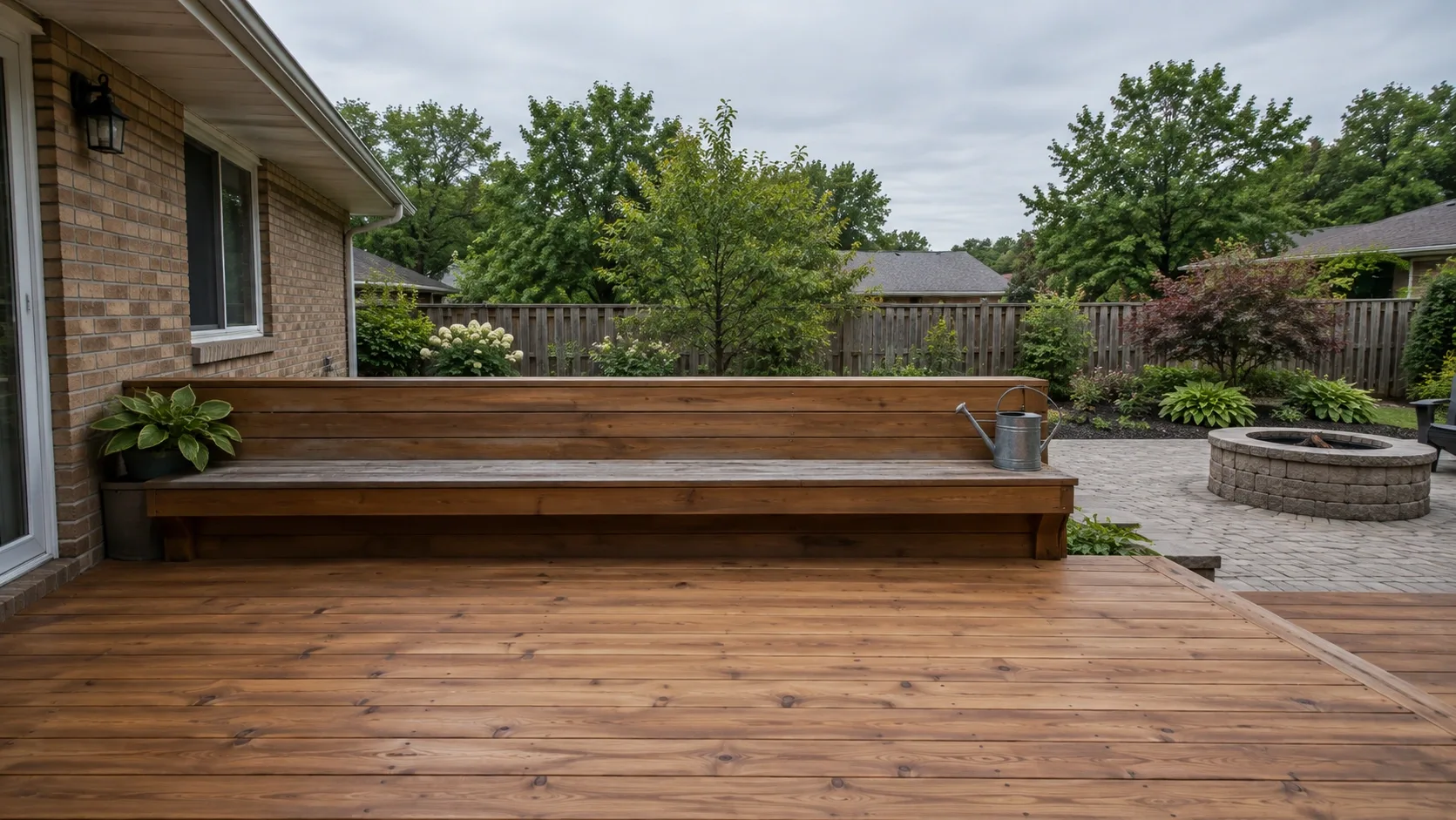
Cedar is the material that sits best against these houses. It takes a semi transparent stain, ages gracefully, and reads as period appropriate in a way that grey composite does not. It needs sealing every two to three years, which is the trade.
Deck repair
Ledger correction, railing rebuilds, re footing sunken posts and stair rebuilds. Oakwood’s housing vintage means deck repair calls here find nailed ledgers and surface blocks more often than anywhere else we work.
Screened porches
A screened porch on an older Oakwood house is a serious project because the roof has to tie into an existing roofline that was never designed for it, and flashing into old brick or original siding is exacting work. Done properly it looks original. Done casually it leaks into a wall you cannot easily open up.
Railing upgrades
Replacing failing wood guards. Here the choice is not automatic: black aluminium railing is the low maintenance answer but a painted wood guard often suits the house better, and on a visible elevation that matters.
Permits and review
Oakwood administers its own building and zoning review. Turnaround is generally reasonable but the zoning side is stricter on setbacks and lot coverage than the county jurisdictions, so it is worth confirming what will fit before committing to a design.
We prepare the framing plan, submit it and meet the inspector at footing and final. You get the signed card.
Streets and areas we work
Across Oakwood, including the houses off Far Hills Avenue, Shafor Boulevard and the streets around Smith Gardens and the Oakwood Community Center. The lots and access vary street by street, which is why we measure rather than estimate from a plan.
Materials that suit Oakwood
Cedar
The default recommendation for a visible deck on a period house.
Warm toned composite
If maintenance is the priority, a mid brown multi tonal composite sits far better against brick and painted trim than a cool grey. Fiberon and the Trex Lineage colours are the ones we usually show here first.
Painted wood railing
Matching the house trim colour, which on an Oakwood house is often the detail that makes a new deck look like it belongs.
Bluestone
For a ground level patio rather than a deck. It is the traditional material for houses of this age and it looks correct where a modern concrete paver does not.
What we find under Oakwood decks
Oakwood’s deck stock is older than the metro average, and the problems repeat.
Nailed ledgers
Decks built here in the eighties and early nineties frequently have the ledger nailed to the house rather than bolted, and almost never flashed. Water has been running behind it into the rim joist ever since. It is invisible from the top and it is the connection responsible for most deck collapses on record. We look at it first on every Oakwood inspection.
Posts buried in soil
Rather than set on a footing with a standoff base. They look fine at eye level and are soft at the soil line. On a tight Oakwood lot, replacing them means jacking the deck in a space with no machine access, which is why we price this work carefully rather than optimistically.
Guards that predate current code
Lower than 36 inches, wider baluster spacing than the 4 inch sphere rule allows, and posts through screwed into the decking. Common on any deck of this vintage and straightforward to correct, though the frame often needs blocking added first.
Decking over a sound frame
The happy outcome, and it happens often enough here to be worth checking. Where the frame is genuinely good, re decking in cedar or a warm toned composite costs roughly a third of a rebuild. We get underneath before we quote.
Living with trees
Oakwood’s tree canopy is one of the reasons people live here and it is hard on a deck. Leaf litter sitting in the board gaps over winter is the main cause of staining and surface mould on composite, and of accelerated rot on wood. Shade also means the deck dries slowly after rain, so anything that traps moisture against the framing matters more here.
Two practical consequences. Clear the gaps before winter rather than in spring. And where a deck sits under heavy canopy, we lean toward materials that do not feed mould, which is the argument for capped PVC over wood flour composite in the most shaded yards.
Getting started in Oakwood
We come out, measure, look at the house connection and the access route, and check setbacks. You get two or three layout options with prices, and a written scope before anything is committed.
The deck cost guide gives the general Dayton area ranges. Oakwood typically runs 8 to 15 percent above those on labour because of access, and we say that up front rather than at the end.
Deck cost in Oakwood, OH
| Project | Typical cost | Why Oakwood is different |
|---|---|---|
| Replace an existing 200 sq ft deck | $11,000 to $19,000 | Hand dug footings, restricted access |
| Cedar deck, 250 sq ft | $9,500 to $16,000 | Cedar suits the period houses |
| Screened porch, 12 by 14 ft | $26,000 to $42,000 | Roof has to tie into an older roofline |
| Deck repair and railing rebuild | $3,500 to $9,000 | Older ledgers are often nailed |
| Access surcharge, narrow lot | Add 8 to 15 percent | No machine access to most back yards |
Ranges are typical installed prices for the Miami Valley and include footings, framing, decking, railings and stairs unless noted. Your written estimate is the number that counts.
Why homeowners pick Apex Decks
Footings below the frost line
Ohio ground heaves. Every post we set lands on a poured footing below the local frost depth, which is what keeps a deck level through a decade of freeze and thaw.
Permits and inspections handled
We pull the permit, meet the inspector and hand you the signed card. An unpermitted deck becomes your problem the day you sell the house.
Written scope before we start
Materials, framing spec, hardware, timeline and price in writing before anybody swings a hammer. No verbal change orders.
Deck questions from Oakwood homeowners
Do I need a permit to build a deck in Oakwood?
Yes. Oakwood runs its own building and zoning review rather than going through the county, and setbacks on the narrow lots here are tighter than in the outer suburbs. Anything attached to the house needs a permit, and a good share of Oakwood back yards will not take the deck people initially draw because of the rear and side setbacks. We check zoning before we price anything.
Why are Oakwood deck jobs more expensive per square foot?
Access, mostly. Most Oakwood back yards cannot be reached by a mini excavator, which means footings get dug by hand and every yard of material gets carried through a gate or a garage. That is real labour and an honest estimate says so up front rather than discovering it on the first morning.
Will a composite deck look wrong on a 1920s Oakwood house?
It can, and this is the one place in the metro where we regularly steer people toward cedar instead. A grey composite board next to original brick and painted wood trim often reads as a modern addition. If low maintenance matters more than period fit, a warmer multi tonal composite in a mid brown sits far better against these houses than a cool grey does.
My Oakwood deck is from the nineties. Repair or replace?
The frame decides, and on decks of that vintage here we very often find a nailed and unflashed ledger, which is the failure that matters. If that connection is compromised, water has been getting into the rim joist for years and the repair opens the wall anyway. We look underneath and at the house connection before we give you an answer.
Can you work around mature trees?
Yes, and it is normal here. Roots restrict where footings can go, so the frame sometimes has to be laid out around them rather than on a neat grid. Cutting major roots to suit a footing grid damages the tree and is not something we do. A deck built around a tree, with proper clearance for growth, is usually the better outcome anyway.