Dayton, OH and the Miami Valley
Wood Decks in Dayton, OH
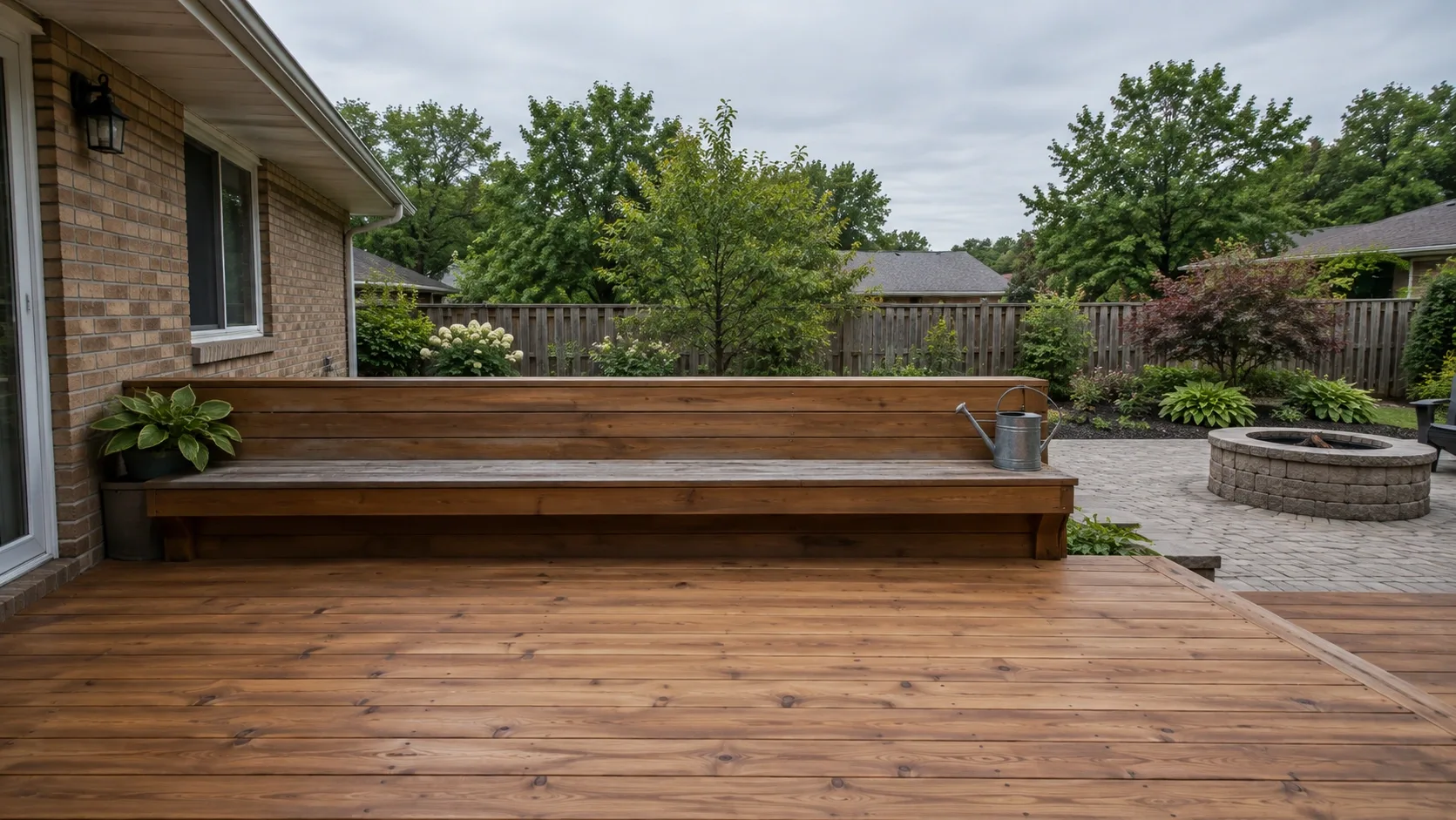
Real wood decks in pressure treated pine and cedar, framed properly and finished so they last. The most deck you can get for the money, provided someone seals it.
- Footings below the frost line
- Permits and inspections handled
- Written scope before we start
Apex Decks builds pressure treated and cedar decks across Dayton and the Miami Valley, on poured footings and with the sealing schedule that keeps them alive.
A treated deck costs roughly half the composite equivalent installed, and if somebody keeps a finish on it, it serves for twenty years. The problem is the conditional clause.
The wood we build with
Pressure treated southern yellow pine
The default and the value option. It is dimensionally strong, cheap, available everywhere and it takes stain readily. We specify ground contact rated material for joists, beams, posts and anything within six inches of soil, and above ground rated for the decking surface. The difference is the amount of preservative retained in the wood, and using the wrong one close to the ground is how a frame fails early.
Western red cedar
Naturally rot and insect resistant without chemical treatment, lighter to work with, stable through freeze thaw, and it takes a semi transparent stain that lets the grain show. It is softer than pine, so it dents where a heavy planter or a steel chair leg sits. It is the right choice when you look at the deck from inside the house every day.
Thermally modified ash
Domestic hardwood baked to change its cell structure so it no longer feeds rot or insects. Stable, dark, and it silvers to a handsome grey if you let it. A good middle ground between cedar and tropical hardwood and it is worth asking about if you like the look of ipe but not the price.
Tropical hardwood
Ipe, cumaru and garapa. Extremely dense, extremely durable, and the labour to install is materially higher because every fastener needs pre drilling. Left unoiled it weathers to silver grey and continues to last. The right answer for someone who wants a deck that will outlive the mortgage.
How we frame a wood deck
Footings and post bases
Concrete footings poured below frost depth, sized for the load, inspected before the pour. Every post sits on a galvanised standoff base that keeps the end grain off the concrete. A post set directly into a hole and backfilled will rot at the soil line, usually somewhere between year twelve and year eighteen, and replacing it means jacking the deck.
Ledger connection and flashing
Through bolted or structurally screwed into the house rim joist at the spacing the span table requires. Then flashed: metal cap flashing over the top of the ledger and self adhering membrane behind it, lapped correctly so water sheds outward. Nailed ledgers and unflashed ledgers are the two failures that put decks in the news.
Joist tape
Butyl tape on the top edge of every joist and beam. On a wood deck this is what keeps the frame alive long enough to outlast two rounds of decking boards.
Hardware throughout
Joist hangers, post to beam connectors, hurricane ties and structural screws, all hot dipped galvanised or stainless because the copper in modern treated lumber corrodes plain steel. Using the wrong fastener in treated wood is a slow failure that is invisible until it is serious.
Finishing and the maintenance reality
When to apply the first coat
New treated lumber arrives wet. Sealing it immediately traps that moisture and the finish fails. We advise waiting until the boards have dried down, usually two to four months in an Ohio spring or summer, then applying the first coat. Sprinkle water on the surface, and when it soaks in rather than beading, the wood is ready.
What to use
A penetrating oil based semi transparent stain with UV blockers is the sensible default for a deck in this climate. Film forming finishes and solid colour deck paints look excellent for two years and then peel, and stripping a peeled film off 400 square feet of decking is a genuinely miserable job.
The schedule
Clean with a deck wash each spring. Re coat every two to three years, sooner on a south or west facing deck. Anything horizontal takes far more punishment than the railings, so the deck surface will need attention before the guards do. Our staining and sealing page covers what that costs if you would rather not do it yourself.
When wood is the right call, and when it is not
Wood makes sense when the budget is the binding constraint, when you genuinely prefer real grain, when the deck is small enough that maintaining it is not a chore, or when the house is old enough that composite would look wrong on it. That last case comes up constantly in Oakwood, where a pre war house with a cedar deck reads correctly and the same house with grey composite does not.
Wood is the wrong call when nobody in the household is going to seal it. That is not a judgement, it is just the most reliable predictor of how a deck looks in year eight. If that is you, spend the extra on composite once and stop thinking about it.
Where we build wood decks
Across Dayton and the surrounding communities including Oakwood, Kettering, Centerville, Beavercreek and Springboro. If your existing wood deck is failing rather than missing, start with deck repair, because a sound frame is worth keeping.
Deck cost in Dayton, OH
| Species | Decking installed, per sq ft | Realistic lifespan | Maintenance |
|---|---|---|---|
| Pressure treated pine | $22 to $34 | 15 to 25 years sealed | Clean and seal every 2 to 3 years |
| Western red cedar | $32 to $48 | 20 to 30 years sealed | Clean and seal every 2 to 3 years |
| Thermally modified ash | $45 to $62 | 25 to 30 years | Oil annually or let it silver |
| Ipe and tropical hardwood | $55 to $80 | 40 years and up | Oil annually or let it silver |
| Add: sand and re seal existing | $3 to $6 | Buys 2 to 3 years | Same schedule after |
Ranges are typical installed prices for the Miami Valley and include footings, framing, decking, railings and stairs unless noted. Your written estimate is the number that counts.
Why homeowners pick Apex Decks
Footings below the frost line
Ohio ground heaves. Every post we set lands on a poured footing below the local frost depth, which is what keeps a deck level through a decade of freeze and thaw.
Permits and inspections handled
We pull the permit, meet the inspector and hand you the signed card. An unpermitted deck becomes your problem the day you sell the house.
Written scope before we start
Materials, framing spec, hardware, timeline and price in writing before anybody swings a hammer. No verbal change orders.
Wood Decks questions we get asked
What is the best wood for a deck in Ohio?
Pressure treated southern yellow pine for most people, because it is the cheapest way to get a structurally sound deck and it takes stain well. Western red cedar if you want the look and are willing to pay 40 percent more. For framing we use treated regardless of what the surface is, with ground contact rated lumber anywhere a member sits close to soil.
How often does a wood deck need sealing in Dayton?
Every two to three years, and the first coat should go on after the new lumber has dried out, usually two to four months after the build rather than immediately. Ohio gives you freeze thaw cycling, real summer UV and rain in every month, which is a harder combination than either a dry climate or a mild one. A deck that has never been sealed will be checking and splintering by year six.
Will a wood deck splinter?
Treated pine will, eventually, particularly on a south facing deck that has been left unsealed. Cedar splinters less and the splinters it produces are softer. Keeping a finish on the boards is the whole defence. If you have small children or dogs and you know you will not keep up with sealing, composite is the honest recommendation.
Is cedar worth the extra cost over treated pine?
If the deck is a visible feature of the house, often yes. Cedar is lighter, stays flatter, has no chemical smell, and takes a semi transparent stain in a way treated pine does not. It is also softer and dents under heavy furniture. On a utility deck that you mainly walk across to get to the yard, treated is the better value.
Can you build with ipe or hardwood decking?
Yes. Ipe and similar tropical hardwoods are dense, close to fireproof, and last decades. They also need pre drilling for every fastener, hidden clips sized for hardwood, and carbide blades, so labour runs higher than treated or cedar. It is a premium build and we price it as one.
Do you use joist tape on a wood deck too?
Yes, and it matters more than most people think. The top edge of a treated joist is where water sits in the screw holes and where the frame rots from. Tape costs a small fraction of the build and it is the reason a well built treated deck frame outlasts its own decking boards.